
The War for Survival
Cosmos game LimitedStrategy
4.5110.00 Reviews
- Version
- 1.3.270
- Installs
- 500.00K
- Age Rating
- Teen
Screenshots
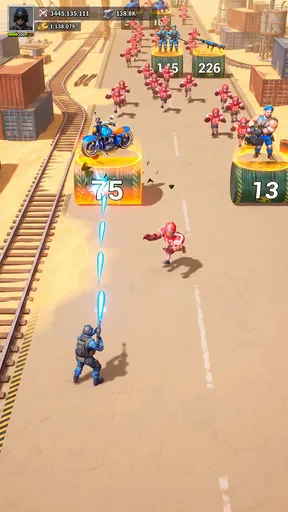
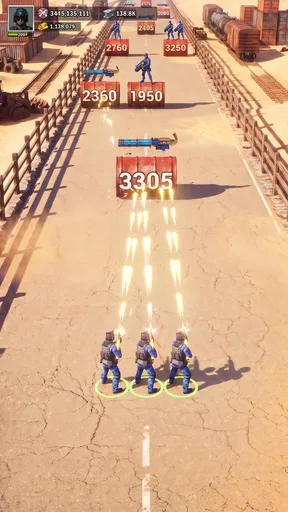
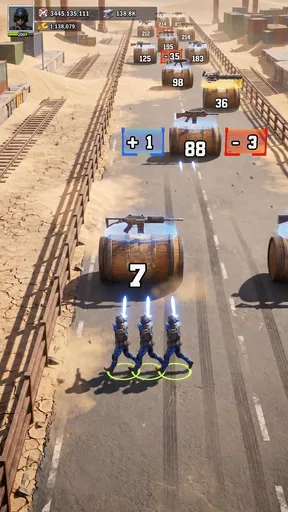
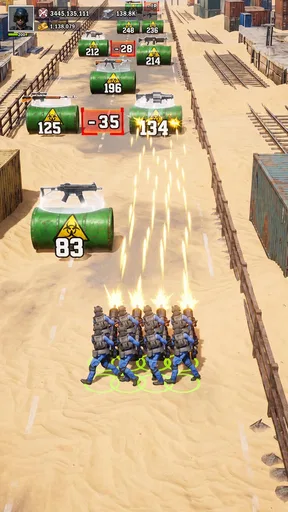
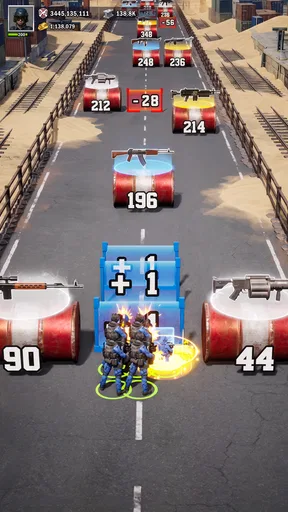
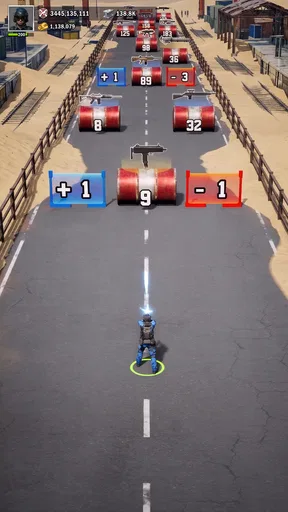
Our Review of The War for Survival
 Analysis by Appyee
I approached The War for Survival as a strategy game for the moments when I want more than a quick tap-through session. Its central appeal is the idea of building my own path through a dangerous survival conflict, but the more useful question for a household is how it behaves when several people share a device, discuss progress, or hand the phone from one player to another. That is where the experience becomes more practical than the dramatic store summary suggests.
Developed by Cosmos game Limited, this free game sits in the strategy category and is aimed at Teen players. It has reached over 500 thousand installs and holds a 4.5 average from around 1.8 thousand ratings, which gives it a reasonably strong first impression without making it a guaranteed fit for everyone. I found that its best audience is someone who enjoys making deliberate choices and accepting that a poor decision may take time to correct.
The game is available at no upfront cost, while optional purchases range from 99 cents to 99 dollars and 99 cents per item. That pricing range matters in a shared-device setting, especially when a younger player can access the same screen. I would treat the game as free to try, not automatically free of spending concerns. A little preparation before handing over the device makes the experience much easier to manage.
How The War for Survival Works in a Shared Household
I find shared play works best when the household treats The War for Survival as one person’s active strategy run rather than a communal save everyone can change at will. Before passing the device, I’d agree on who is playing and invite others to advise instead of tapping through decisions. That small routine makes it easier to enjoy the game together while keeping progress and responsibility clear.
One device, different players, and the importance of a clear handoff
A realistic use case is a family tablet or a phone that moves between two people during the day. One person may play during a commute, another may continue later, and a third may simply watch and offer advice. Strategy games often encourage this kind of informal collaboration, but it can also create confusion when nobody is sure whose progress is being changed.
My first recommendation is simple: decide who owns the active game session before starting. The person playing should make the important decisions, while spectators can suggest options without reaching for the screen. This sounds obvious, yet it prevents the most common shared-device problem: someone spends resources, confirms an action, or changes direction before the original player has had time to think.
I also found that a short verbal handoff works better than assuming the next person will understand the situation. Saying what the current goal is, what has already been committed, and what decision is being considered gives the next player useful context. In a survival strategy game, that pause is valuable because a rushed choice can be more damaging than a slow one.
For households with several players, I would keep one simple note outside the game with the player’s name and the last agreed objective. This is not a feature of the app; it is a practical routine that reduces accidental interference. It is especially helpful when the device is shared between schoolwork, entertainment, and several games.
Setting boundaries before anyone starts spending
The free entry point makes it easy to install and test, but the optional purchases deserve a deliberate household rule. Because individual items can cost from 99 cents up to 99 dollars and 99 cents, I would not leave purchasing decisions to chance. The safest approach is to agree that no purchase happens without the device owner’s permission.
This is also a good place to separate game progress from real-world spending. A player may feel pressure to improve a difficult situation immediately, but waiting is often the better household habit. I prefer a rule that treats every purchase as a separate decision rather than as a normal part of play. If the game is being used on a shared device, the person who owns the payment method should remain the final decision-maker.
That boundary also improves the game itself. When players know that progress will not be rescued automatically by a purchase, they pay closer attention to planning. I found the experience more satisfying when I treated limited resources as a reason to think, not as an invitation to solve every setback with money.
Another useful boundary is time. Strategy sessions can stretch because the player wants to finish one more decision or see the result of a plan. In a shared household, agreeing on a stopping point avoids arguments and makes it easier for someone else to use the device. A short session can still be worthwhile if the player ends after reviewing the next objective instead of stopping in the middle of an important choice.
Coordinating decisions without turning the game into an argument
The War for Survival works best when discussion stays focused on choices rather than on who is “right.” If one household member prefers aggressive moves and another prefers caution, the disagreement can become part of the fun, provided the active player has the final say. I recommend explaining the reason behind a decision, because that turns a shared session into a strategy conversation instead of a sequence of commands.
A strong coordination habit is to divide advice into three parts: immediate danger, available resources, and the next realistic objective. This keeps the conversation grounded. Rather than saying “do this,” a helper can point out what appears urgent, what should be preserved, and what outcome the player is trying to reach. That approach is useful for younger Teen players who are still learning how to evaluate trade-offs.
I would also avoid having several people make simultaneous suggestions. A crowded conversation makes it harder to notice consequences, and the person holding the device may tap simply to end the debate. One adviser at a time is calmer and gives the player room to make an independent choice.
For parents or older siblings, the most constructive role is to ask questions. “What are you protecting?” or “What happens if you delay this?” encourages planning without taking control. It also reveals whether the player understands the situation or is only following instructions. That distinction matters if the goal is to build strategy skills rather than merely complete a session.
Account boundaries and what I would clarify first
When a game is used by more than one person, I would establish whose progress belongs to whom before investing serious time. I would not assume that a shared device automatically creates separate player spaces, and I would avoid treating a single visible session as a reliable boundary between household members. If separate progress matters, each person should agree on how the device will be used and verify the arrangement during setup.
This is particularly important when a child and an adult use the same phone. The adult should handle installation, payment decisions, and any account-related choices, while the younger player can focus on the game itself. Keeping those responsibilities separate reduces the chance that a casual handoff becomes an accidental account change or an unwanted purchase.
I also recommend not sharing a personal login casually. Even in a friendly household, an account can represent more than one game. A player who wants to move between devices should first understand what information is connected to the session and who is responsible for it. The practical rule is to keep ownership clear and avoid making progress dependent on an account that several people control informally.
For a single-player household, this concern is much smaller. The game is easier to evaluate when one person makes all decisions, follows one spending rule, and can return to the same plan later. The shared-device angle does not make the game unsuitable; it simply means that organization becomes part of the experience.
Teen suitability, trust, and the role of supervision
The Teen content rating is an important part of deciding who should play. I would not present this as a young-child game merely because it is free to download. The survival and war framing gives it a more mature tone, and the household should consider whether that theme fits the player’s age and temperament.
For a Teen player, I think the game can be a useful setting for conversations about consequences, patience, and responsible spending. I would still begin with a supervised session, not because every moment needs monitoring, but because the first session reveals how the player reacts to pressure, setbacks, and optional purchases. Trust works better when it is built from observation rather than assumed in advance.
Adults should also remember that strategy advice can become overly controlling. If the player is old enough to make the decisions, the point of supervision should be understanding and boundaries, not playing on their behalf. I prefer letting the Teen explain the plan, then discussing whether the plan seems sensible. That keeps the game challenging while giving the household a chance to address concerns naturally.
On the other hand, I would skip this game for a younger child who is not ready for the Teen context, for anyone who struggles with the war-and-survival theme, or for a player who becomes upset when a plan fails. A calmer puzzle or turn-based alternative with a lighter setting would be a better choice in those cases. The strategy label alone should not decide suitability.
Where it stands beside more familiar strategy alternatives
Compared with a traditional board-game adaptation, The War for Survival feels more like an ongoing survival challenge than a neat match with a clearly defined finish. That can make it more involving, but it also means the player may need more patience and self-direction. Someone who wants a quick, contained contest may prefer a classic digital board game.
Compared with a city-building strategy game, the survival framing puts more emphasis on responding to danger and protecting a plan. City builders are often better for players who enjoy careful construction without the same sense of pressure. I would choose this game for a household member who likes uncertainty and difficult trade-offs, not for someone seeking a purely relaxing creative sandbox.
It also differs from fast competitive strategy games. The appeal here is not simply reacting faster than another person. A shared household can discuss the situation, weigh alternatives, and let one player act. If your preferred strategy experience is built around rapid multiplayer competition, this may feel slower and more solitary. If you enjoy thinking through consequences, that slower pace is a strength.
The practical trade-off is commitment. A familiar puzzle game is easier to pause mentally and return to without remembering much. This game rewards keeping track of goals and decisions, so it benefits from a player who enjoys continuity. That is why I would recommend it more strongly to a patient strategist than to someone looking for a five-minute distraction.
Version, device expectations, and everyday usability
The current version is 1.3.270, and the minimum operating system is 12. On a household device, that requirement should be checked before planning a shared installation. An older phone or tablet may be excluded even if it still handles simpler games comfortably, so the person managing the device should confirm compatibility first.
I would also leave enough free attention for the first launch rather than installing it while someone else is rushing to use the device. A strategy game is easier to judge when the player can understand the opening flow, decide whether the tone suits them, and establish the household rules before progress becomes meaningful.
The game’s free price lowers the risk of trying it, but not the risk of wasting time on a poor match. My approach is to use the first session as an evaluation: does the player enjoy planning, can the household agree on spending, and does the Teen context feel appropriate? If the answer to any of those is no, uninstalling early is more sensible than forcing the game into the household routine.
Three practical habits that improved my sessions
First, I stopped making decisions simply because they were available. In a survival strategy game, the presence of an action does not mean it deserves immediate attention. I found it more useful to identify the current priority, then judge every tempting option against it. This reduced impulsive choices and made the game feel more deliberate.
Second, I used a “pause before commitment” habit during shared play. Before confirming an important move, I summarized what I expected to happen and asked whether anyone saw a serious downside. This took only a moment, but it prevented the kind of accidental action that causes friction when several people use one device.
Third, I separated learning sessions from serious progress. When another person wanted to understand the game, I let them observe or make low-pressure decisions rather than handing over the entire plan immediately. That protected the main player’s progress while still making the game accessible to a newcomer. It is a small distinction, but it works well in families and shared apartments.
A fourth habit was reviewing the next step before stopping. I did not try to solve everything in one sitting. Instead, I ended by identifying the immediate objective and the resource or decision that mattered most next time. This made returning to the game easier and prevented the common problem of reopening it without remembering why I had stopped.
Who should install it and who should pass
I would recommend this game to a Teen or adult who enjoys survival themes, planning under pressure, and learning from imperfect decisions. It is also a good candidate for a shared household when everyone can respect one active player, keep payment authority clear, and discuss strategy without taking over.
I would be more cautious with a household that wants completely separate experiences on one device. Unless everyone has agreed on how progress and access will be handled, shared use can become confusing. I would also point cautious parents toward a different genre if they want a lighter theme, simpler supervision, or no possibility of optional spending.
The game is less convincing for players who want instant action, a short self-contained match, or a purely social experience. Its strongest moments come from making choices and living with them. If that sounds like work rather than entertainment, a quick arcade title or a relaxed puzzle game will probably be a better fit.
My household verdict
After looking at it as both a strategy game and a shared-device activity, I see The War for Survival as a worthwhile free download for the right household, not a universal recommendation. Its 4.5 average and over 500 thousand installs suggest that it has found an audience, but those figures do not replace a personal test of the theme, pace, and decision-making style.
My strongest recommendation is to establish boundaries before the first serious session: one person controls the active run, adults handle purchases, and Teen suitability is discussed openly. With those basics in place, the game can support enjoyable conversations about planning instead of creating arguments over progress or spending.
The best reason to try it is its decision-focused survival atmosphere; the best reason to hesitate is the responsibility that comes with shared access and optional purchases. I would install it for a patient Teen or adult who likes strategy and wants a game that can be discussed around the household. I would skip it for younger children, players uncomfortable with its mature framing, or anyone seeking a simple, instantly finished distraction.
For me, that makes the game a measured recommendation rather than an automatic one. It is free to enter, current on devices running version 12 or later, and flexible enough to become a personal challenge or a family conversation. The experience is most rewarding when the player is trusted to make decisions, while the household remains clear about age, account ownership, and spending.
Verdict
Strengths of The War for Survival
- Tense survival gameplay rewards careful planning and resource management.
- Exploration offers varied locations and useful supplies to discover.
- Combat encounters provide a steady challenge without feeling overly repetitive.
- Crafting lets you create practical tools, weapons, and survival equipment.
- The post-apocalyptic setting creates a strong atmosphere for long play sessions.
Limitations of The War for Survival
- Progress can feel slow when essential resources become difficult to obtain.
- Some missions may become repetitive after extended play.
- Enemy difficulty can occasionally rise sharply between areas.
- Inventory space may feel limited during longer exploration trips.
- Performance may vary on older phones, especially in busy locations.
Similar Picks in This Category
View All
Clash of Clans
Supercell4.5

Plants vs. Zombies™
ELECTRONIC ARTS3.7

Lords Mobile: Kingdom Wars
IGG.COM4.5

Clash Royale
Supercell4.4

State.io — Conquer the World
CASUAL AZUR GAMES4.1

Car Driving School : Car Games
Spark Game Studios3.9
Frequently Asked Questions
What is The War for Survival about?
The War for Survival is a survival-focused action game in which you must protect yourself in a hostile world, gather useful resources, improve your equipment, and face dangerous enemies. Progress usually depends on exploration, combat, crafting, and managing limited supplies. Before downloading, players should expect a challenging experience that rewards patience, planning, and regular upgrades rather than relying only on fast reflexes.
Can The War for Survival be played offline?
The availability of offline play may depend on the specific version and feature being used. While some basic gameplay elements may work without a constant connection, online functions such as account synchronization, events, advertisements, purchases, rankings, or multiplayer features generally require internet access. It is best to install the game while connected and check its connection requirements before relying on it during travel or in areas with limited service.
Is The War for Survival free to download and play?
The War for Survival can generally be downloaded without an initial purchase, but free access does not necessarily mean that every item or feature is available at no cost. Games in this genre may include optional in-app purchases for resources, upgrades, cosmetics, or progress-related advantages. Players should review the store listing and device payment settings, especially if children may use the device, to avoid unexpected purchases.
What devices are compatible with The War for Survival?
Compatibility depends on the operating system, device model, available storage, and the minimum software version required by the current release. Because survival games can use significant graphics and memory resources, older phones or tablets may experience slower loading, reduced visual quality, overheating, or occasional crashes. Check the official Android or iOS store page before downloading and make sure sufficient free storage is available for updates.
Is The War for Survival suitable for children?
The War for Survival may not be appropriate for every child because its gameplay can include combat, hostile creatures or characters, destruction, pressure-based progression, and optional purchases. The actual suitability depends on the age rating shown in the official store and the child’s maturity. Parents should review the rating, privacy information, advertising behavior, and purchase controls before allowing installation, and consider enabling parental restrictions on the device.
Play our best games!


